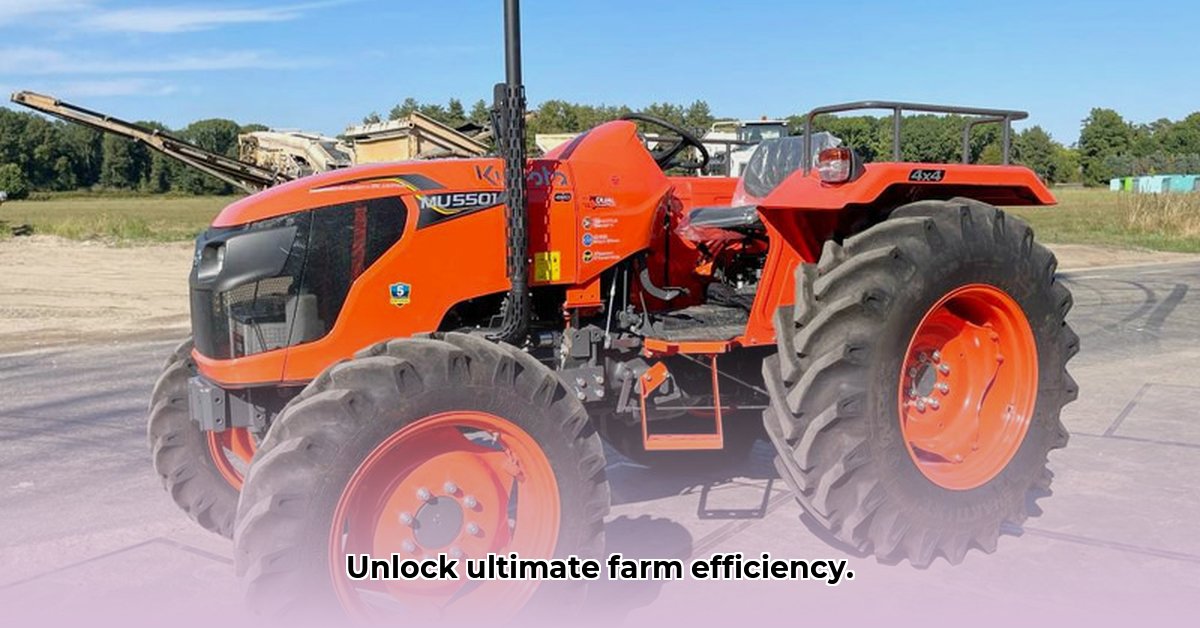
This comprehensive guide helps you master your Kubota 4WD tractor, enhancing farm efficiency and sustainability. We'll cover operation, maintenance, troubleshooting, and safety, empowering you to maximize your tractor's potential. For more on 4WD compact tractors, check out this helpful resource: 4WD Tractor Info.
Understanding Your Kubota 4WD System
Your Kubota's 4WD system significantly improves traction by distributing engine power to all four wheels. This enhanced grip is crucial in challenging conditions like muddy fields, steep inclines, and snowy landscapes. The result? Reduced fuel consumption, less soil compaction, and increased productivity. Think of it as adding extra muscle to your tractor, allowing you to tackle tougher jobs with ease. The exact mechanics may differ slightly depending on your specific Kubota model; always consult your owner's manual for detailed specifications. However, the core principle remains consistent: improved traction, leading to higher efficiency and reduced environmental impact. Don’t you want to get the most from your investment?
Engaging and Disengaging 4WD: A Step-by-Step Guide
Safety is paramount. Always engage and disengage 4WD with the tractor completely stopped and the clutch disengaged.
Engaging 4WD:
- Full Stop: Bring your tractor to a complete stop.
- Clutch In: Fully depress the clutch pedal.
- Locate Lever: Find the 4WD control lever (location varies by model).
- Engage: Shift the lever to the "4WD" position.
- Clutch Out: Slowly release the clutch pedal.
Disengaging 4WD:
- Full Stop: Stop the tractor completely.
- Clutch In: Fully depress the clutch pedal.
- Shift Lever: Move the 4WD lever to the "2WD" position.
- Clutch Out: Slowly release the clutch pedal.
Remember, unnecessary 4WD use on hard surfaces increases wear and tear. Isn't preventative maintenance more cost-effective than emergency repairs?
Operational Tips for Different Terrains and Tasks
Adapting your 4WD usage to varied conditions optimizes efficiency and minimizes damage.
- Muddy Conditions: Engage 4WD and use a low gear to prevent wheel spin and maximize traction. Slow and steady wins the race here.
- Hills: Engage 4WD before ascending or descending steep slopes. Maintain a slow, controlled speed to enhance stability and prevent rollovers. Remember, even with 4WD, hillside operation requires caution.
- Snow & Ice: 4WD is essential, but extreme caution is still necessary. Drive slowly, avoiding sudden movements. Consider tire chains for extra grip in severe conditions. Have you ever gotten stuck in a snowdrift?
- Heavy Loads: 4WD's increased traction is crucial for hauling heavy loads, preventing wheel slippage and maximizing pulling power. However, never exceed your tractor's weight capacity.
Maintenance and Troubleshooting: Proactive Care
Regular maintenance prevents costly repairs and ensures optimal performance.
- Visual Inspections: Regularly inspect the 4WD system for leaks, damage, or loose connections. Catch small problems before they become big ones.
- Lubrication: Follow the lubrication schedule in your owner's manual to keep moving parts functioning smoothly. Insufficient lubrication can lead to significant problems.
- Differential Lock (Use with Caution): Only engage the differential lock in extremely slippery conditions. Misuse can cause damage to your tractor's components.
Common Issues & Solutions:
| Problem | Possible Cause(s) | Solution |
|---|---|---|
| 4WD Won't Engage | Faulty lever, low fluid levels | Check the lever, inspect fluid levels, consult your manual, or contact a mechanic. |
| Grinding Noise in 4WD | Worn gears, insufficient lubrication | Check lubrication, consider professional repair. |
| Increased Vibration in 4WD | Drive shaft misalignment | Seek professional diagnosis and repair. |
Safety First: Your Well-being is Paramount
Prioritize safety at all times:
- Always wear your seatbelt.
- Never operate the tractor while fatigued, impaired, or under the influence.
- Exercise extra caution on slopes and uneven terrain.
- Be aware of your surroundings and the limitations of your equipment.
Regular safety training is a worthwhile investment. Is your safety worth more than a few hours of training?
Conclusion: Reap the Rewards of Proper 4WD Use
Mastering your Kubota 4WD system translates to increased farm efficiency, reduced soil compaction and fuel consumption, and enhanced safety. Regular maintenance and adherence to these guidelines will ensure your tractor’s longevity and maximize your return on investment. By prioritizing both the proper operation and maintenance of your Kubota 4WD tractor, you can contribute to a more sustainable and profitable farming operation. Remember, a well-maintained tractor is a successful farm’s best friend.